My first duty station in the Marine Corps, after all the initial training, was in Okinawa, Japan. I remember one Friday or Saturday, my friend and I decided to go out to a local restaurant. I don’t remember much about the restaurant or what we ate, but I do remember two distinct experiences from that visit.
First, we were very politely “scolded” for not taking off our shoes when we walked in. Now, I don’t honestly know if they were scolding us or not—the person who greeted us didn’t speak English and we didn’t speak Japanese. We got the hint, though, when they pointed at our feet and then at the row of shoes next to the door. Minus one cool point for the jarheads.
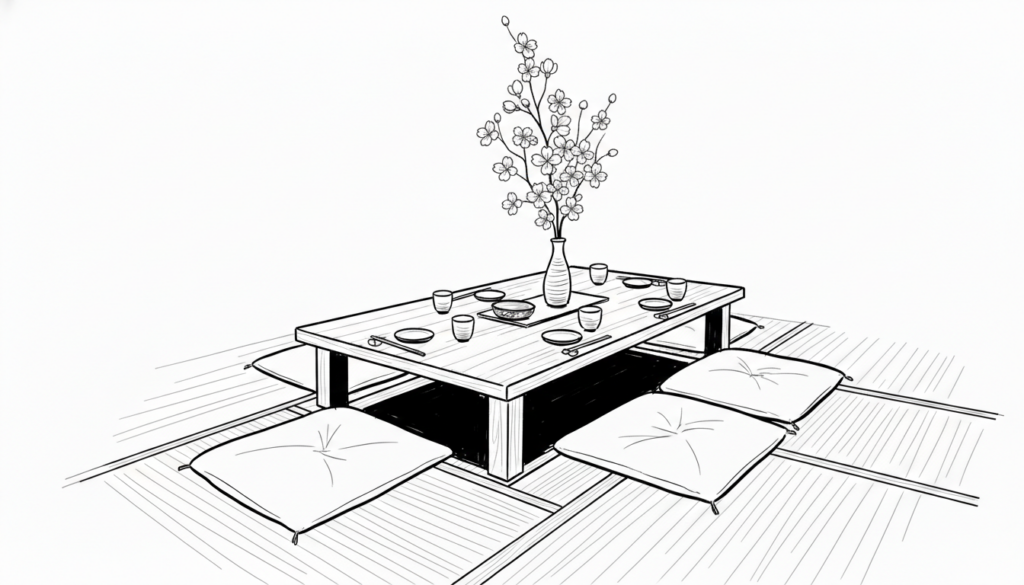
We were then brought into the dining area where we sat on the floor at a classic Japanese dining table. As we looked over the menu, we saw pictures and Japanese writing. This was before you could break out a cell phone, open up Google Lens, and have it translate for you. Our server wasn’t going to be of any help either—zero English was being spoken.
So, my friend and I looked at the pictures and figured they must represent the meal. We picked out a picture that looked like it might be good. When the server returned, we pointed to the picture and tried to convey that’s what we wanted.
This is where things got confusing.
We weren’t met with a nod and smile. Instead, the server was trying to tell us something. After a few exchanges of speaking and pointing at the menu, we came to the conclusion that the picture was not an actual menu item.
As any good Marine will do, we improvised, adapted, and overcame. I broke out my best attempt at charades to indicate I wanted a meal with chicken. Yes, you’re probably visualizing it correctly—young Craig making chicken wing motions and eating gestures. I may have thrown in a cluck or two. I’m pretty sure I glanced at the others in the restaurant and saw some laughs and smirks.
Like I said, I don’t remember what we ended up eating or if I even liked it. But I earned it.
What does this have to do with therapy? Communication. Specifically, how we communicate love in a relationship.
You and your partner may both speak the same native language, but do you speak the same native love language? How do you naturally show love for people you care about, and what makes you feel loved? Have you ever asked each other—or yourself?
Imagine if, in your whole relationship, you’ve been very intentional about doing things for your partner. Going out of your way to make their life easier. The whole time thinking to yourself, “What a good partner I am for making sure they know I love them.”
Now, what if that whole time, your partner didn’t understand what you were communicating? They basically just saw you making chicken wings.
What if it isn’t you doing things for them that makes them feel loved—but what resonates and gives them the warm and fuzzies is when you touch them as you walk by, or give a spontaneous hug, or tell them they’re looking mighty fine or that they’re appreciated?
Does it start to make sense why maybe either or both of you may be feeling unloved? It may not be because you aren’t speaking your love language—it’s that it isn’t understood or received as love.
Are you experiencing emotional disconnect in your relationship? Maybe you’re frustrated because you keep hearing your partner say they don’t feel loved? Do arguments usually result in the same theme again and again?
It might just be that all you need to do is learn a few meaningful “phrases” in your partner’s love language. That’s where change starts to happen.
Tired of Doing Chicken Wings?
If something here resonated and you’re curious about exploring it further, therapy can be a space to do that thoughtfully and at your own pace.
This content is for informational purposes only and is not a substitute for psychotherapy.